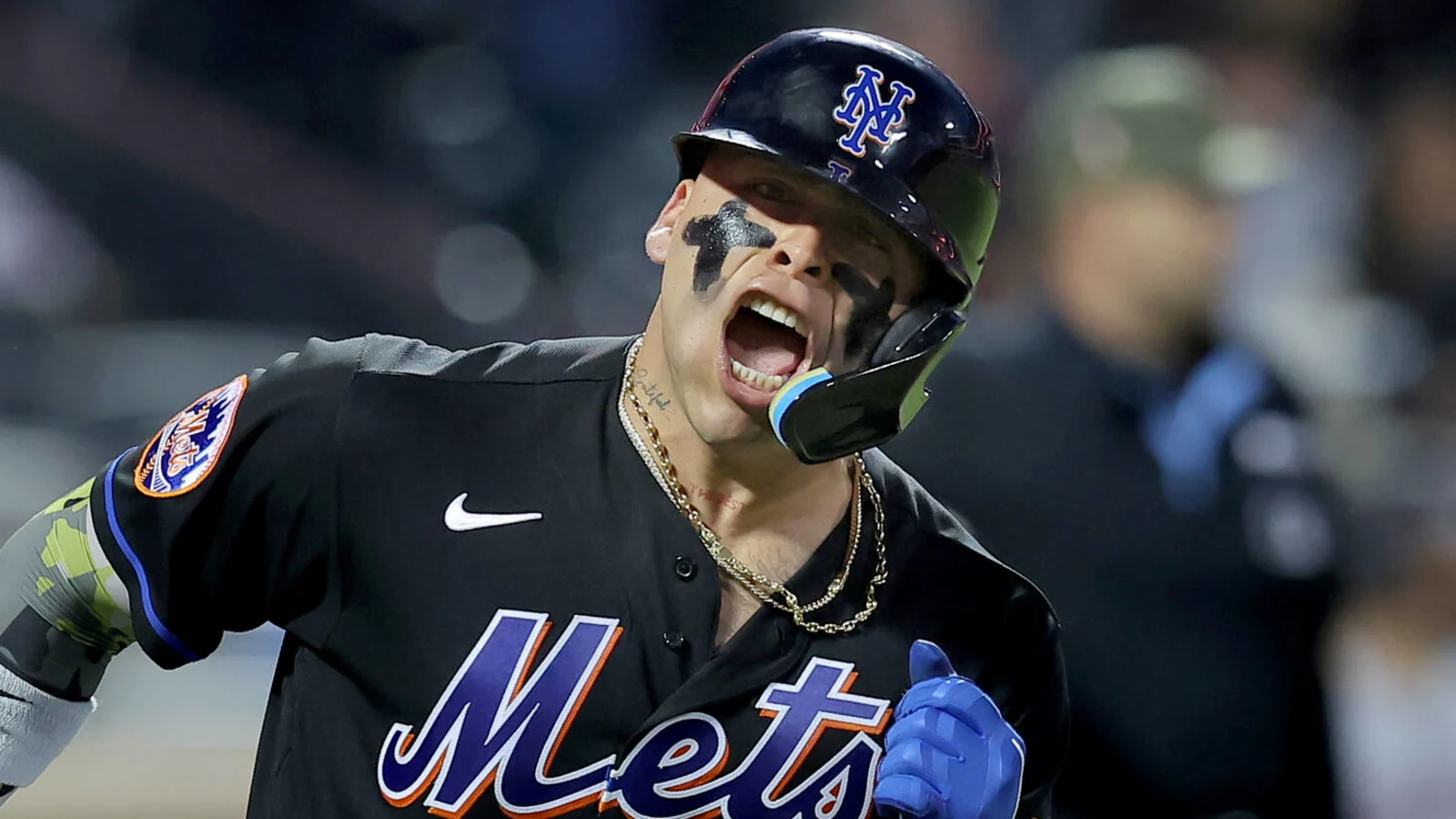
The MLB CBA 2026 fight is here, folks, and I’m telling you straight—this salary cap battle between baseball owners and the MLBPA will make or break the sport I’ve covered for two decades. Maybe it’s because I grew up dreaming of playing shortstop for the Tigers, or maybe it’s because I’ve watched every labor negotiation since the devastating 1994 lockout. Either way, what’s coming before December 1, 2026 isn’t just another collective bargaining agreement—it’s a war that will echo through every level of baseball.
The numbers tell an unmistakable story. The Los Angeles Dodgers built a payroll of an estimated $379 million, while the New York Mets aren’t far behind at $312.5 million. Meanwhile, MLB’s lowest payrolls are the Miami Marlins at $31.35 million and the Athletics at $55.25 million. That’s a twelve-to-one spending gap that makes competitive balance look like a cruel joke.
By The Numbers: Baseball’s Economic Reality
- CBA Expiration: December 1, 2026 at 11:59 PM ET
- Current Luxury Tax Threshold: $241 million for 2025
- Minimum Salary: $760,000 (2025)
- Largest Payroll Gap: 12:1 ratio between highest and lowest spenders
- Last Work Stoppage: 99-day lockout in 2021-22
The Salary Cap Showdown: An Immovable Object Meets An Unstoppable Force
Here’s where things get fascinating—and potentially devastating. MLBPA executive director Tony Clark has made his position crystal clear: “A cap is not about any partnership. A cap is not about growing the game. That’s not what a cap is about. As has been offered publicly, a cap is about franchise values and profits.”
“This is institutionalized collusion. That’s what a salary cap is.” — Tony Clark, MLBPA Executive Director
Clark’s language isn’t just strong—it’s deliberately provocative. Having covered these negotiations for years, I can tell you that when union leaders start using terms like “collusion,” they’re not planning to compromise. Clark has characterized any salary cap proposal as “institutionalized collusion” that “pits one player against another” and “doesn’t reward excellence.”
But here’s what makes this fight different from previous labor battles: the owners aren’t just asking for cost certainty anymore. Commissioner Rob Manfred has been making an effort to pitch the league’s message directly to individual players, particularly those “who find themselves at the lower end of the earning spectrum to stress the discrepancy in player salaries.”
Historical Context: When Baseball Stopped
The Last Great War: The 1994-95 strike remains baseball’s darkest hour. The owners made a serious attempt to get a salary cap in place 30 years ago, which led to the 1994-95 strike, during which there was no World Series played for the ’94 season. That 232-day work stoppage fundamentally changed how America viewed its national pastime.
I remember that summer as a kid—the empty stadiums, the cancelled World Series, the bitter taste that lingered for years afterward. My dad, a lifelong baseball fan, didn’t watch another game until the McGwire-Sosa home run chase in 1998. That’s the kind of damage we’re risking here.
MLB lockouts have occurred in 1973, 1976, 1990 and 2021-2022. Player strikes in baseball history came in 1972, 1973, 1980, 1981, 1985 and 1994-1995. This isn’t theoretical—work stoppages are baseball’s nuclear option, and both sides have shown they’re willing to push that button.
The Ripple Effect: From Little League to The Show
Here’s what keeps me up at night thinking about this negotiation: it’s not just about millionaire players and billionaire owners. Every weekend, I watch my neighbor coach his daughter’s softball team, and I think about how these decisions trickle down through the entire baseball ecosystem.
Consider the international implications alone. MLB angled for an international draft, which would replace the international free-agent apparatus, during the last CBA negotiations. However, many Latin players, who make up a sizable portion of the MLBPA’s constituency, are opposed to an international draft. We’re talking about fundamentally altering how kids from the Dominican Republic, Venezuela, and Puerto Rico access the path to the majors.
A salary cap doesn’t just limit what Mookie Betts can earn—it transforms the economic incentives that drive player development from the ground up. When teams know their spending is capped, they invest differently in scouting, player development, and international academies. The ripple effects reach every level of the game.
The current luxury tax system already functions as a soft cap for many teams. A hard cap would devastate competitive balance by removing the ability of well-run organizations to invest in excellence. #MLB #CBA2026— Baseball Economics (@BaseballEcon) February 11, 2025
The International Stakes: Baseball’s Global Growth
Baseball’s international expansion represents one of the sport’s greatest success stories. The game appears to be growing and moving in the right direction, with more attendance than we’ve had in a long time, and more people are watching and streaming games than ever before. But that growth depends on maintaining the sport’s unique economic structure.
I’ve been to World Baseball Classic games where you can feel the electricity of global competition. That tournament exists because baseball’s current system allows different countries to develop distinct playing styles and talent pipelines. A salary cap could homogenize that development, making every team approach talent the same way.
What’s Really At Stake: The Soul of Competition
Here’s my take, and I know I sound passionate about this: over the last 25 years, the team with the largest payroll in baseball has won the World Series just four times. The Yankees didn’t buy their way to a championship in 2009 just because they outspent everyone—they had to execute, develop talent, and make smart decisions.
But the current system is broken in different ways. 36.6 percent of big-league ballplayers on current active rosters will earn less than the NHL minimum over the course of a full season. Among them are All-Stars Junior Caminero ($764,100) and Jonathan Aranda ($766,500) of the Rays. That’s embarrassing for a sport generating $12.1 billion in annual revenue.
The question isn’t whether baseball needs economic reform—it’s whether both sides can find a solution that preserves what makes the sport special while addressing its glaring inequities.
The Negotiating Landscape: Where We Stand Today
Representatives from MLB and the MLBPA recently held a meeting to discuss the sport’s labor issues, with lead negotiators Dan Halem for MLB and Bruce Meyer for the MLBPA both participating. The discussions remain in early stages, with formal negotiations not expected to begin until spring.
But don’t let the early timing fool you. MLBPA executive director Tony Clark has reiterated that he expects a lockout when the current collective bargaining agreement expires. “No one’s talking about it, but we all know that they’re going to lock us out for it, and then we’re going to miss time,” New York Mets All-Star first baseman Pete Alonso said.
I’ve been around enough of these fights to recognize the warning signs. When players start publicly preparing fans for a work stoppage, that’s not posturing—that’s preparation.
Alternative Solutions: The Road Not Taken
Here’s what frustrates me about this entire debate: there are workable alternatives that both sides seem determined to ignore. A salary floor without a cap could address competitive balance concerns while preserving the earning potential that makes baseball unique. In the NFL, teams must spend to at least 89 percent of the cap. In the NHL, the floor for 2024-25 was $23 million below the $88 million cap.
Revenue sharing reform offers another path forward. Presently, teams share national broadcast revenues equally. On the local front, each team contributes 48% of local revenues—meaning local broadcast contracts; gameday revenues like ticket sales, concession sales, and parking receipts; sponsorships; and merch sales. Why not adjust those percentages to encourage competitive spending?
The Automation Factor: Technology Changes Everything
One underreported aspect of these negotiations involves the automated ball-strike system. Manfred suggested the automated ball-strike system could be part of the next round of CBA negotiations. ABS was introduced to big league Spring Training games this year as a challenge system, which was mostly viewed as a success around the league.
Having watched robot umps in action during spring training, I can tell you they fundamentally change the game. Strike zones become perfectly consistent, which affects everything from pitcher development to offensive strategies. These technological changes represent just one more variable in an already complex negotiation.
The Human Cost: When Baseball Stops
Let me be blunt about what another work stoppage would mean. The CBA expires Dec. 1, 2026, and the sides appear to be far apart, increasing the likelihood of a lockout roughly 13 months from now. Barring an agreement, regular-season games could be lost for the first time since 1995.
I think about the vendors at Comerica Park, the ushers at Fenway, the groundskeepers at Wrigley. These negotiations aren’t just about millionaires fighting billionaires—they’re about the thousands of working people whose livelihoods depend on baseball being played.
And then there are the fans. My son is just starting to understand baseball strategy, to appreciate the chess match between pitcher and hitter. Missing even part of a season at this stage of his fandom could turn him away from the sport permanently. That’s how baseball lost a generation in the 1990s.
Looking Ahead: The Endgame Scenarios
So where does this leave us? The most important meetings will take place closer to the Dec. 1, 2026, deadline, with November the most vital month to establish where the sides really stand. Both sides are already positioning for what could be the sport’s most contentious labor fight since 1994.
Several agents and teams believe that cost certainty in the form of a new CBA—and, if MLB gets its way, a first-ever salary cap—will return spending back to higher levels simply because teams will understand their yearly costs more intimately after a new deal. That’s the owners’ best argument: predictability could actually increase overall spending.
The 2026 CBA negotiations will determine whether baseball evolves into a more equitable sport or fractures under the weight of its own contradictions.
The Verdict: Why This Matters Beyond Baseball
Here’s my bottom line, folks: this negotiation transcends sports. As someone who’s covered labor relations across multiple industries, I can tell you that what happens between MLB and the MLBPA will influence union strategies throughout American professional sports.
Baseball’s players association remains the most powerful union in professional sports. As baseball expert Kevin Wilson aptly pointed out, “Out of all the sports, baseball’s union is by far the most powerful. It’s probably one of the most powerful unions in America, period.” If they accept a salary cap, it sets a precedent that reverberates far beyond the diamond.
But the current system isn’t sustainable either. The spending disparity between the Dodgers and Marlins makes a mockery of competitive balance. I’m not naive enough to believe that every team should spend equally, but when a single team’s luxury tax payment exceeds another team’s entire payroll, we’ve crossed into absurdity.
The Bottom Line: A Sport at a Crossroads
The 2026 CBA negotiations will reshape baseball for the next generation. Public comments from league and union leaders already signal sharp disagreement on core economic architecture and competitive-balance fixes, which raises the risk of a lockout or strike if talks break down.
I believe both sides understand the stakes. The question is whether they care more about winning this fight than preserving what makes baseball special. The sport survived 1994-95, but it emerged fundamentally changed. Another work stoppage could accelerate baseball’s decline among younger fans who have more entertainment options than ever before.
The clock is ticking toward December 1, 2026. I’ll be watching these negotiations with the intensity of a parent whose kid is just falling in love with the game. Because that’s what this is really about—not the economics or the egos, but the simple magic of a perfectly turned double play on a summer afternoon.
Baseball has survived world wars, integration battles, and steroid scandals. The question now is whether it can survive its own success long enough to find a solution that works for everyone from the kid dreaming of the majors to the veteran closing out his career.
I hope they figure it out. We can’t afford to lose baseball again.
Related Resources:
ESPN: Complete CBA Negotiations FAQ