
When Kelsie Whitmore heard her name echo through the inaugural Women’s Pro Baseball League draft on November 20, 2025, the moment transcended mere athletic achievement. Selected first overall by the San Francisco franchise, the 27-year-old Filipino-American pitcher and outfielder stood at the intersection of personal triumph and cultural metamorphosis—a living embodiment of how women’s sports continue reshaping the American athletic landscape. “You ask a 6-year-old version of me about this opportunity happening right now, she would, one, probably not believe you, but, two, just be so, so, so, so excited for it,” Whitmore reflected in the moments following her selection, her voice carrying the weight of decades spent fighting for recognition in a sport that had systematically excluded women from professional pathways since 1954.
Whitmore’s pathway to this watershed moment began not in gleaming stadiums but in the sunbaked youth fields of San Diego, where her parents—both educators—nurtured an unconventional dream. Her father, Scott Whitmore, a physical education teacher, and her mother, Mirasol, a kindergarten teacher, fostered an environment where their daughter’s athletic aspirations transcended gendered expectations. From age six, Kelsie played catch regularly with her father, developing the mechanics and mental fortitude that would eventually carry her through Little League, PONY Baseball, and as the solitary female player on Temecula Valley High School’s baseball team. The cultural dimensions of her identity—particularly her Filipino heritage through her mother’s Gamboa lineage—added layers of complexity to her journey, making her not merely a baseball player but a representation of multicultural excellence in American sports. “With me being Filipino, it’s definitely something I’m proud of and want to represent,” Whitmore emphasized during her tenure with the Oakland Ballers, underscoring how her ethnic identity informs her sense of purpose beyond individual achievement.

The trajectory from high school phenom to professional athlete demanded extraordinary resilience, particularly for a woman navigating baseball’s overwhelmingly male infrastructure. While attending Cal State Fullerton on a softball scholarship, Whitmore simultaneously trained with the university’s baseball team, honing skills that would eventually propel her onto the international stage. Her involvement with the United States women’s national baseball team beginning in high school brought silver medals at the 2014 Women’s Baseball World Cup and gold at the 2015 Pan American Games, achievements that validated her capabilities on a global platform. Yet the absence of professional opportunities in the United States forced Whitmore into an unprecedented path: competing against men in independent leagues where scrutiny intensified with each appearance. “Before every pro ball season I’ve gotten into there is an amount of stress that comes into it, like, ‘I need to make sure I’m proving myself, that I earned this contract to be in this league,'” she acknowledged, revealing the psychological burden of being perpetually evaluated not as an individual athlete but as a representative of her entire gender.
In 2016, Whitmore made professional baseball history alongside Stacy Piagno with the Sonoma Stompers, becoming the first female teammates in a men’s professional league since women played in the Negro Leagues during the 1950s. That initial foray into professional baseball—recording her first professional hit on July 20, 2016—represented more than statistical achievement; it signaled the resumption of women’s participation in American professional baseball after a seven-decade hiatus. The journey intensified in 2022 when Whitmore signed with the Staten Island FerryHawks, becoming the first woman to compete in Major League Baseball’s partner Atlantic League. Entering games with bases loaded, facing former major leaguers, pitching in hostile road environments—each appearance demanded she prove her legitimacy in spaces designed to exclude her. The emotional toll manifested in her reflection on competing in men’s leagues: “There’s an amount of, ‘Am I throwing the ball up to par, up to what they expect?’ and comparing myself to all the other men I will be competing and playing with. It’s stressful because it takes you out of who you are as a player.”
https://www.instagram.com/p/Cz4t1-XP4Cq
The establishment of the Women’s Pro Baseball League represents a seismic shift not merely for Whitmore but for the countless young women who have been forced to abandon baseball dreams due to structural barriers. WPBL co-founder Justine Siegal, herself a pioneering figure as the first woman to coach for an MLB organization, articulated the magnitude of Whitmore’s selection: “Kelsie worked her whole life for this moment. She is the first draft pick this century for a women’s pro baseball league, and the WPBL is honored to give her this opportunity. Kelsie represents all the girls and women out there who dream of playing professional baseball.” The league’s framework—four teams representing Boston, New York, Los Angeles, and San Francisco, playing at Robin Roberts Stadium in Springfield, Illinois—offers unprecedented professional infrastructure for female baseball players, complete with salary structures, housing provisions, and sponsorship revenue sharing that legitimizes women’s baseball as a viable career path.

Whitmore’s return to the Bay Area carries profound symbolic resonance. San Francisco—where her professional journey began with the Sonoma Stompers in 2016—now serves as the geographic and emotional anchor for the next chapter of her career. Her 2024 stint with the Oakland Ballers, where she became the first woman to start a Pioneer League game, demonstrated the region’s embrace of women’s baseball, with young girls flooding games to witness a player who reflected their own aspirations. “There were lots of young girls that came out to games because of all the girls youth travel ball teams out here in the Bay Area. I got to connect with the community in that way,” Whitmore recalled, illustrating how representation transforms abstract possibilities into tangible realities for emerging generations. The Filipino-American community in California—one of the largest Asian-American populations in the United States—now possesses a professional baseball ambassador whose achievements validate multicultural participation in America’s national pastime.
The emotional liberation Whitmore experienced upon being drafted into the WPBL speaks to the psychological costs of being a perpetual pioneer. “I feel like there’s so much peace now going into this Women’s League because I’m finally done trying to impress or prove or compare myself to others that I shouldn’t have been doing all along. Now coming into this league, I can just be myself. I feel like myself is finally enough,” she expressed, articulating the exhaustion of constant scrutiny and the relief of competing in a space designed for women rather than one grudgingly accommodating their presence. This sentiment resonates beyond individual experience, reflecting broader cultural shifts where female athletes increasingly refuse to accept male-defined standards as the sole metric of athletic legitimacy.
https://www.tiktok.com/@wpbl_official/video/7439947832146439470
The emergence of female athletes across sports landscapes—from Caitlin Clark revolutionizing women’s basketball to the NWSL’s explosive viewership growth—positions Whitmore’s achievement within a broader cultural moment. Women’s sports have transcended tokenism, evolving into commercially viable enterprises demanding serious investment and institutional support. The WPBL, launching with MLB Commissioner Rob Manfred’s endorsement and New Era as presenting sponsor, signals institutional recognition that women’s baseball possesses both athletic merit and market viability. Whitmore’s journey from playing alongside men out of necessity to leading a women’s professional league reflects this transformation—a shift from survival mode to sustainable infrastructure.
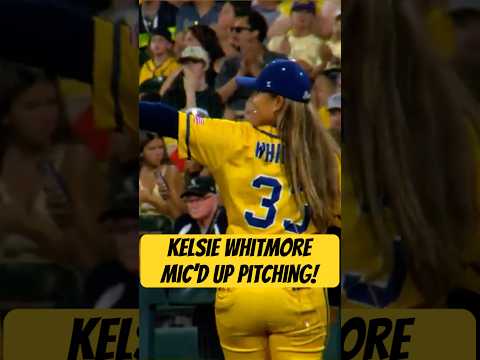
Whitmore’s Filipino-American heritage adds critical dimensions to conversations about diversity and representation in baseball, a sport historically dominated by white and Latino men with limited Asian-American participation. Her recognition of this responsibility—winning the Silayan Filipina National Organization Panama Legacy Award for contributions to the Filipino community—demonstrates consciousness of her role as cultural ambassador. “There’s not a lot of Filipinos in the baseball world. I would love to see more people of Filipino, Asian-American and Pacific Islander backgrounds coming out and supporting the Ballers,” she stated during her Oakland tenure, explicitly connecting her athletic platform to broader aspirations for ethnic representation. In an era where American demographics continue diversifying while baseball’s professional ranks remain demographically narrow, Whitmore’s visibility challenges persistent notions about who belongs in the sport.
The familial foundations of Whitmore’s success—particularly her parents’ unwavering support despite societal pressures to redirect their daughter toward more “appropriate” athletic pursuits—illuminate how progressive parenting creates space for exceptional achievement. “Both of my parents were teachers. My dad, PE teacher, my mom, kindergarten teacher. They are very supportive. It’s good to have family support, especially when you feel very isolated,” Whitmore acknowledged during her Hall of Fame visit, where artifacts from her career now reside alongside baseball’s legendary figures. Her parents’ educational backgrounds—understanding child development and the importance of nurturing individual passions—provided crucial counterweight to external voices suggesting she pursue softball or abandon baseball entirely. This family dynamic reflects broader sociological patterns where educated, progressive parents increasingly challenge gendered expectations in youth sports.
As the WPBL prepares for its August 2026 inaugural season, Whitmore’s selection as the first overall pick establishes her as the league’s foundational figure—its Jackie Robinson moment, if you will. The four-team structure, neutral venue approach, and emphasis on competitive excellence rather than novelty positioning signal serious intentions to build sustainable professional women’s baseball. Unlike previous attempts at women’s professional baseball leagues that folded due to financial instability or lack of institutional support, the WPBL enters an era where women’s sports have demonstrated both athletic excellence and commercial viability. Whitmore’s presence anchors this enterprise, bringing name recognition, proven performance, and a compelling personal narrative that transcends baseball’s traditional audience.
The significance of having a league designed by women for women—with Justine Siegal’s leadership representing decades of advocacy—cannot be overstated. “It’s just a really cool opportunity that’s not just for me, but for a lot of young girls. They now have a platform to look up to and to navigate through,” Whitmore observed, recognizing how her individual achievement creates infrastructure for collective advancement. Young women nationwide now possess a concrete pathway from youth baseball through professional ranks, transforming baseball from a childhood activity abandoned in adolescence to a legitimate career possibility. This structural transformation—more than any individual performance—represents the WPBL’s revolutionary potential.
Whitmore’s journey embodies the complex interplay between individual excellence and systemic change. Her athletic achievements—gold medals, professional milestones, pioneering firsts—demonstrate exceptional talent. Yet her significance extends beyond statistics to her role as catalyst for institutional transformation. By refusing to accept softball as the only professional option, by enduring years of scrutiny in men’s leagues, by maintaining her commitment to baseball despite overwhelming obstacles, Whitmore created momentum that eventually manifested in the WPBL’s formation. Her story illustrates how individual persistence can ultimately precipitate structural change, how one person’s refusal to accept limitations can expand possibilities for entire communities.
The Filipino-American community’s celebration of Whitmore’s achievement reflects broader recognition of representation’s power in professional sports. In communities where athletic role models have historically been scarce, Whitmore’s visibility demonstrates what’s possible when talent receives opportunity. Her pride in her heritage—openly discussing her Filipino identity, accepting community awards, encouraging greater Asian-American participation in baseball—establishes her as a cultural ambassador whose influence extends beyond athletic performance. This dimension of her significance speaks to how sports serve as vehicles for ethnic pride and cultural validation in multiethnic societies.
Looking toward the WPBL’s inaugural season, Whitmore approaches this new chapter with gratitude tempered by awareness of the work ahead. Building a sustainable professional league requires not merely talented athletes but institutional support, media coverage, fan engagement, and financial investment that women’s sports have historically been denied. Yet the momentum behind women’s sports—record-breaking viewership for women’s basketball and soccer, increased sponsorship dollars, growing media attention—suggests conditions have shifted sufficiently to support the WPBL’s ambitions. Whitmore’s role as the league’s inaugural first overall pick positions her to be not merely a player but a spokesperson, advocate, and symbol of the league’s aspirations.
The transformation from playing in front of skeptical audiences in men’s leagues to competing in a women’s professional league represents more than a change in venue—it signifies a fundamental shift in how women’s baseball is perceived and valued. “I wish I’d had something like (the WPBL) when I was around 17-18. If I knew that I had an outlet and a path to play professional baseball, it would have made life a little bit easier. Everything was worth it in the end,” Whitmore reflected, acknowledging both the struggles of her pioneering path and the satisfaction of knowing future generations will face fewer obstacles. This intergenerational perspective—suffering hardships so others might have easier paths—characterizes many social justice movements, positioning Whitmore within a broader tradition of activists and pioneers who endure personal costs for collective advancement.
As Whitmore prepares to don a San Francisco uniform and step onto Robin Roberts Stadium’s field in August 2026, she carries more than her family’s dreams or her community’s hopes. She embodies the aspirations of every young woman who has been told baseball isn’t for girls, every athlete whose talents have been dismissed or minimized because of gender, every person who has fought for recognition in spaces designed to exclude them. Her selection as the first overall pick in the WPBL draft marks not an ending but a beginning—the start of a new era where women’s baseball possesses professional infrastructure, institutional support, and cultural legitimacy. In this new chapter, Whitmore’s excellence can finally speak for itself, unburdened by the exhausting necessity of perpetually justifying her presence. And that liberation—the freedom to simply play baseball without carrying the weight of an entire gender’s capabilities on her shoulders—may prove to be the most revolutionary achievement of all.
Related External Resources
• MLB.com: Kelsie Whitmore Selected First Overall at Inaugural WPBL Draft
• ESPN: Kelsie Whitmore Goes No. 1 in Women’s Pro Baseball League Draft
• Women’s Pro Baseball League Official Website
• Baseball Hall of Fame: Trailblazer Kelsie Whitmore Leaves Her Mark in Cooperstown